Ears for years
Are Basset Hounds good family dogs?
Yes, with the right family. They're gentle with kids, calm at home, and loyal in a way that feels chosen. They're also stubborn, they drool, and they hate being left alone all day. The good and the messy, before you bring one home.
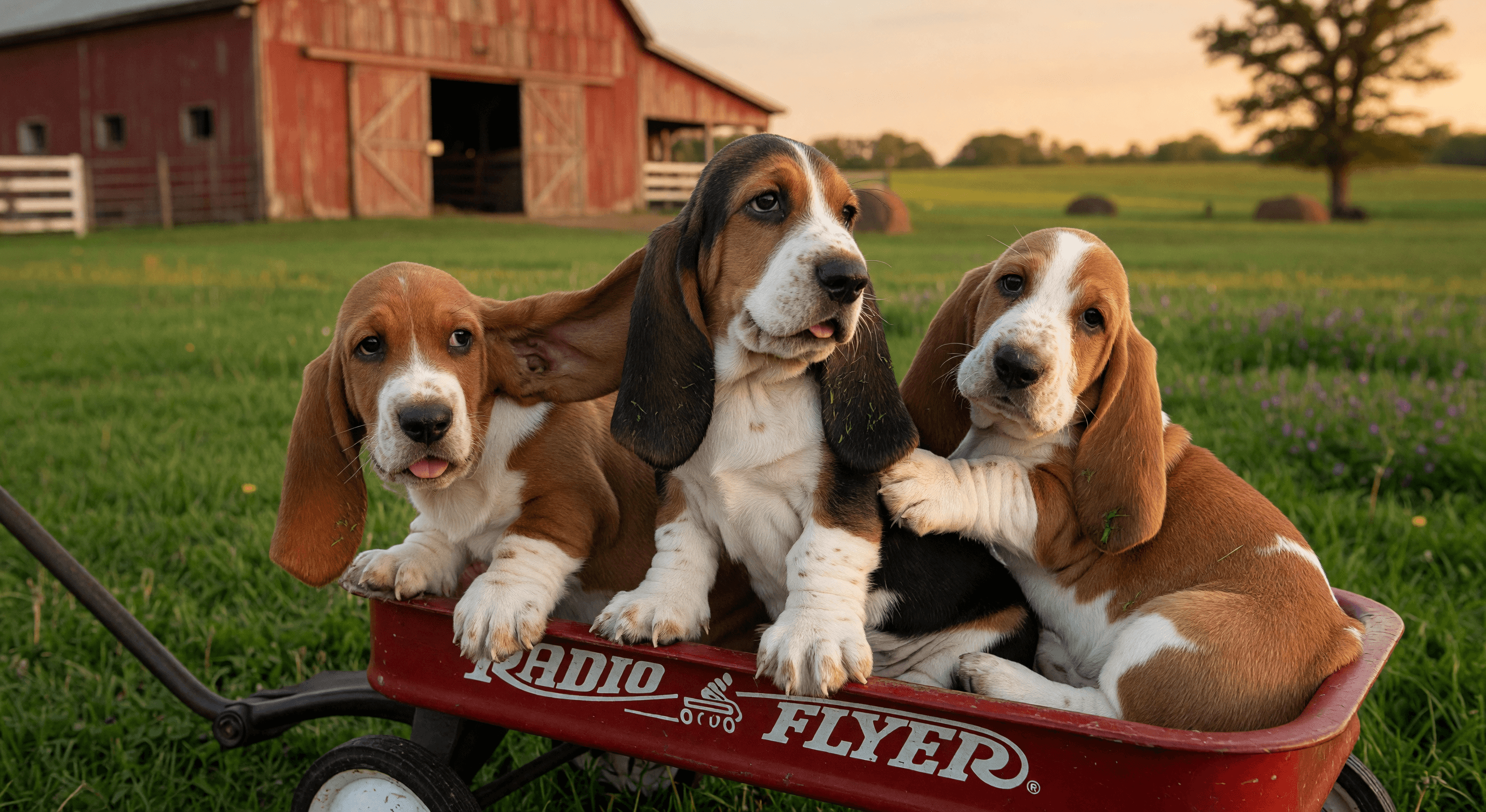
Why people choose Bassets.
The face gets them in the door. The heavy folds, the long ears that look like they belong on a much larger animal, the eyes that seem to have already decided you're theirs. It is a face built for loyalty, and for making you laugh before the dog has done anything at all.
Live with one and the face becomes only the beginning. Bassets carry a kind of calm that settles into a room. They will plant themselves beside your desk for three hours while you work, then rise like it is the most important decision of the day when they hear the treat jar lid.
The stubborn streak is real. It is also the same trait that let their ancestors stay on a cold trail for hours while the hunter walked behind. In your house it shows up as “I will wait here by the counter until the sandwich situation resolves itself” and also as “I will sit with you through whatever this hard season is.”
They suit more than just families, though they are wonderful with children who learn to be gentle with the low body and the sensitive ears. People who work from home discover a quiet coworker who occasionally offers a deep theatrical sigh at 3pm. Retirees find a walking partner who prefers the same unhurried pace. Anyone who likes a good slow walk with actual sniffing will find a partner in crime.
It never feels put on. A Basset is affectionate without being needy about it, and the loyalty reads less like training than like the dog made up its mind about you a long time ago.
What Were Basset Hounds Bred For?
Basset Hounds were bred to hunt low to the ground. In French, “basset” simply means low. Hunters in the forests of France needed a dog that could move easily through thick cover while staying close to the ground on a scent trail. The short legs came from a natural genetic variation in the old St. Hubert hounds. The monks at the abbey had already spent centuries sharpening the nose and the voice. The low body was the missing piece.
Those dogs lived close to the ground so their noses could stay in the scent that lingers strongest near the earth. Their voices carried through the trees so the hunter could follow without a horse. The work was slow, deliberate, and stubborn. The dogs were built for exactly that.
The type traveled to England in the 1800s. Breeders there added a little more bone and ear from Bloodhound crosses. The dogs arrived in the United States in the 1880s and found a country that would fall hard for the look and the personality. American breeders emphasized the heavy bone and the long body that define the breed today.
The hunting brain never left. It just redirected its considerable powers toward the UPS driver, the squirrel that made poor life choices near the fence, and the exact geography of every food item in the house.
The Basset Hound Temperament
Basset Hound temperament is patient with the family, loud when they have something to say, and independent once a smell shows up. Puppies from our current litters grow up with that same hound brain.
With family
Bassets tend to roll with the household rhythm. They are patient with children who learn not to pull the ears or climb the low back. Many become quiet guardians of the smallest humans in the house, content to lie nearby through naps and tantrums and story time. They are pack dogs at heart and often do best with company, canine or human.
The voice
The bay is the loudest thing about them. It is deep and it carries, and a Basset will use it on the mailman, the doorbell, dinner, or nothing at all. Some people hear music in it. Some hear a lot of dog. Either way, it is how a Basset talks, and you will catch yourself talking back.
The independent mind
They are not being difficult when they ignore a recall to finish reading a fascinating smell. They are being exactly the dog their ancestors were. Training works when it respects that history. Food helps enormously. Patience helps more. Anger never does. The same stubbornness that frustrates a novice is the trait that makes a Basset stay by your side when life gets hard.
With other dogs
Most Bassets are excellent with other dogs. They were bred to hunt in groups and they still carry that social wiring. Introductions matter, as with any breed, but a well-socialized Basset often welcomes a second hound as the best news they have heard all week.
Basset Hound Care: Ears, Weight, Backs, and Bloat
Basset Hound care comes down to a few non-negotiable realities. The long ears, the food obsession, the back that carries a long body on short legs, and the deep chest all ask for specific habits. None of it is complicated once it becomes routine. This daily care is your part. Our health guarantee covers the problems a puppy is born with, and you can read about each of our moms and dads.
Ears and skin folds
Those long ears are the breed's signature and also the place that needs the most regular attention. Moisture and debris collect fast. A few minutes with a vet-approved cleaner two or three times a week, followed by a careful dry, prevents the infections that make both of you miserable. The folds on the face and neck need the same attention after meals or walks. It becomes a quiet habit that protects the parts of them that make everyone smile.
Weight
Bassets were built to hunt all day on very little. Life with people offers more calories and less ground to cover. The extra pounds land directly on the long back and the joints that were never meant to carry extra freight. Two measured meals a day, honest limits on treats, and daily movement are not restrictions. They are the way you keep the dog you love comfortable into old age.
Exercise and sniffing
They do not need to run. They need to investigate. A good daily walk where the leash is long enough for real sniffing and the pace belongs to the dog does more for their mind and body than any amount of jogging. Nose games and puzzle toys at home turn the same instinct into play. A bored Basset will find ways to entertain themselves, and those ways are rarely quiet.
Backs and joints
The long body and short legs are the breed's charm and their physical reality. Dramatic jumps from furniture or cars stress the spine. Ramps and common sense protect it. Puppies need to grow at the right speed. Adults need to stay lean. The dogs that stay comfortable longest are the ones whose people pay attention to these simple mechanics.
Food and bloat
They will work harder for a piece of cheese than for almost anything else. That drive is useful in training and it requires respect around mealtimes. Feed measured portions twice a day rather than free choice. Keep the bag and the garbage secure. Learn the signs of bloat, a real emergency in deep-chested dogs: unproductive retching, a swollen belly, distress. It does not happen often, but knowing what to watch for is part of the job.
Coat, nails, and teeth
The short coat sheds steadily and asks only for a weekly brush. Nails need regular trimming so the feet stay sound. Teeth benefit from the same care any dog needs. None of it is complicated. All of it adds up to a dog who stays comfortable in their own body. Our Basset Hound colors photos show each coat on our own moms and dads.
Are Basset Hounds Good With Kids, and Is One Right for You?
Generally, yes. A Basset is patient and sturdy with children who learn not to pull the ears or climb the long back, and many become quiet company for the smallest people in the house. Whether one is right for you comes down to daily life with a hound.
You'll probably do well with one if you can answer yes to most of these:
- A dog that stops mid-walk to conduct a full investigation of one square foot of grass strikes you as funny rather than inconvenient.
- You can commit to ear cleaning as a regular, non-negotiable part of life with this breed.
- A little drool on your pants or the arm of the couch is something you can laugh about or at least tolerate without resentment.
- Your living situation gives the dog a safe way to follow their nose without ending up in traffic or the next town over.
- You have the patience to train with high-value food and good humor instead of expecting quick, eager compliance.
- You are prepared to keep a food-obsessed dog at a healthy weight for about 12 to 13 years.
- A voice that can fill a house (and sometimes the yard) feels like character rather than a problem to solve.
If those feel like things you can do with a straight face and maybe even a smile, the rest of the package tends to feel like a gift. The steady warmth. The ridiculous greetings. The way they choose a person and then simply stay chosen. The quiet comedy of sharing a life with a dog who has very strong opinions about cheese and very little interest in pretending otherwise.
Current Basset Hound puppies are listed with their parents, and there’s more on the first days after pickup, including the food they’re already on.
Common questions.
The things people ask us most before bringing a Basset home.
Do Basset Hounds drool?
Yes. Those loose lips, called flews, hold water and sling it when they shake, so you'll find drool on walls, pants, and the occasional ceiling. It's worst around food and right after they drink. A towel by the water bowl becomes a way of life. If a little slobber would wear on you daily, this isn't your breed.
Do Basset Hounds smell?
They carry a bit more hound scent than some breeds. The short coat has a natural oil, and the long ears and skin folds will hold moisture if you let them. Keep the ears and folds clean and dry, brush weekly, and bathe when needed, and a healthy Basset just smells like a dog, not a problem.
Do Basset Hounds bark a lot?
They don't yap, but when a Basset has something to say, the whole street hears it. The bay is deep and it carries, aimed at the mail carrier, the doorbell, or nothing at all. Most settle into quiet company at home. But if you need silence or share thin apartment walls, factor the voice in.
Are Basset Hounds easy to train?
Not in the eager-to-please way a retriever is. Bassets were bred to follow a scent for hours without checking in, so they think for themselves. Train with high-value food, short sessions, and patience, and they learn well. They're just never going to snap to a command the second a good smell shows up.
Can you leave a Basset Hound home alone?
For a normal workday with a midday break, most do fine. For long stretches every day, many struggle. They're pack dogs, and too much time alone turns into howling, crying, or chewing. If your house sits empty ten hours a day, a Basset will let you know about it, loudly.
Are Basset Hounds good with kids and other pets?
Generally yes to both. They're patient and sturdy with children who learn not to climb the long back or pull the ears. And because they were bred to hunt in packs, most love other dogs and do well with cats they're raised alongside. Introductions still matter, like with any dog.
What health issues do Basset Hounds have?
Basset Hound health issues that come with the build are ear infections from those long ears, back and joint strain from the long body, easy weight gain, and the bloat risk that comes with a deep chest. Good breeding, a lean weight, clean ears, and no big jumps prevent most of it. If you want a parent's health records, ask. We keep them, and we're glad to share.
How long do Basset Hounds live?
About 12 to 13 years on average, and plenty go longer when they're kept lean and well cared for. The biggest factor in your hands is weight. An overweight Basset puts years of strain on its back and joints, so measured meals and sensible treats add real time to their life.
Do Basset Hounds shed?
Yes, steadily, all year. The coat is short, but there's a lot of dog under it, so expect hair on the couch and the floor. A weekly brush keeps it manageable and cuts down on what ends up around the house. They aren't hypoallergenic, so if shedding is a deal-breaker, keep looking.
How big do Basset Hounds get?
Shorter than people expect, and heavier. They stand about 14 inches at the shoulder but carry 40 to 65 pounds of solid bone. A Basset is a big dog on short legs, not a small dog. That low, dense build is also why they shouldn't be leaping off the couch or the bed.
Are Basset Hounds lazy?
No. A Basset will plant itself beside your desk for hours, then get up when it hears the treat jar. They don't need to run. They need to investigate. A bored Basset finds its own entertainment, and that is rarely quiet.
Are Basset Hounds smart?
They think for themselves. They were bred to follow a scent for hours without checking in, so training takes patience and food: high-value food, short sessions, and no anger. They learn well. They won't drop a good smell the second you call.